









NIST Framework Implementation for Regulated and Federal Environments
We help organizations align to NIST CSF, NIST SP 800-171 and the NIST Risk Management Framework with clear system boundaries, risk-led governance, and evidence-ready documentation that stands up under contractual, regulatory and third-party review.


NIST Compliance
What is NIST?
NIST refers to a suite of cybersecurity and risk management frameworks developed by the National Institute of Standards and Technology. These include the NIST Cybersecurity Framework, NIST SP 800-171 for protecting Controlled Unclassified Information, NIST SP 800-53 for federal systems, and the NIST Risk Management Framework. Together, they define how organizations identify risk, select and implement security controls, assess effectiveness, and maintain structured governance across information systems.
Who requires NIST?
NIST alignment is required or expected for defense contractors handling CUI, federal system operators subject to SP 800-53 and RMF, organizations preparing for CMMC Level 2, critical infrastructure providers, and enterprises responding to contractual cybersecurity requirements. In many regulated and federal environments, adherence to applicable NIST standards becomes a prerequisite for contract eligibility, regulatory credibility, and participation in sensitive supply chains.
Why is NIST needed?
NIST frameworks establish a disciplined, risk-based approach to cybersecurity governance across complex and regulated environments. They replace informal or fragmented controls with clearly defined security objectives, documented control implementation, measurable oversight, and structured evidence. In federal and contractual settings, security must be demonstrable, defensible, and repeatable. NIST provides the structure that makes that demonstration credible under review.
Why NIST Matters Now
NIST frameworks have become the reference point for how “good cybersecurity” is defined in regulated and federal environments. What has changed is not the existence of controls. It is the expectation that organizations can explain their scope, justify their control decisions, and produce evidence that matches how systems actually operate when it is tested under review.
Today, NIST matters because:
Governance becomes formally accountable
NIST pushes accountability to the forefront of security management. CSF requires governance and risk ownership, while RMF formalizes documented decisions, approvals, and periodic reassessment. Security becomes an organizational discipline with traceable oversight rather than isolated technical activity.
CUI boundaries become clearly defensible
SP 800-171 requires organizations to define where CUI resides, how it flows, and which systems and users fall within scope. Boundary decisions must be documented and consistently applied. When scope is unclear, evidence becomes inconsistent and control claims weaken under review.
Risk management requires lifecycle discipline
RMF requires system categorization, control selection, assessment, authorization, and continuous monitoring. Each stage builds on the previous one and must be documented and repeatable. Security decisions are tied directly to system impact and maintained over time.
Federal contracts require traceable evidence
Across agencies and supply chains, NIST alignment increasingly requires demonstrable artefacts rather than verbal assurance. Reviewers expect structured SSPs, control narratives, POA&Ms, and mapped evidence. Documentation must support clear explanation when sampling occurs.
Documentation requires structural alignment
NIST programs often fail where policy statements, technical settings, and operational behavior do not align. Sampling exposes inconsistencies quickly. When gaps appear, remediation affects structure, not just individual controls, making late correction significantly more complex.
Where NIST Programs Break Under Scrutiny
Most NIST failures are not technical breakdowns. They occur where scope decisions, documentation, and operational reality do not align. Under review, inconsistencies surface quickly. When that happens, scrutiny deepens, scope expands, and remediation becomes structural rather than isolated.
System boundaries inevitably drift under review
When CUI flow or system impact is not clearly documented, scope becomes unstable. During review, assessors identify additional systems, users, or data paths not formally included. What begins as a contained implementation quickly expands into a moving target.
SSP narratives diverge from implementation
System Security Plans often explain how controls are intended to work, not how they are actually configured. When narratives do not align with system settings, logs, or procedures, reviewers begin validating every assumption rather than sampling evidence.
Control decisions lack documented rationale
Baseline controls may exist, but the risk categorization and impact determination that drove them is unclear. Without traceable decision logic, implementation appears mechanical rather than risk-informed, weakening the credibility of the program.
Monitoring collapses into periodic activity
Continuous monitoring is reduced to an annual review or pre-assessment exercise. Risk registers stagnate, corrective actions are loosely tracked, and governance becomes reactive. Under scrutiny, that lack of lifecycle discipline becomes visible.
Our NIST Services
Effective NIST implementation demands disciplined scoping, precise control interpretation, aligned documentation, and defensible evidence management. Our services are structured to move organizations from fragmented effort to structured, review-ready execution.

Consulting
We support organizations in defining system categorization, CUI scope, and applicable control baselines across NIST CSF, SP 800-171, SP 800-53, and RMF. Risk impact levels, control applicability, and authorization logic are documented early so scope and responsibility remain stable throughout implementation.

Gap Assessment
We evaluate implemented controls against applicable NIST requirements and document variance at the control and objective level. Assessment outputs include control family mapping, implementation status, documented rationale gaps, and prioritized remediation aligned to contractual exposure.

Documentation
We develop and refine System Security Plans, control implementation statements, and POA&Ms that accurately reflect technical configuration and operational ownership. Control narratives are aligned to risk categorization decisions, asset inventories, and monitoring activities to ensure internal consistency.

Readiness Review
We simulate structured review conditions, including evidence sampling, control walkthroughs, and traceability checks from requirement to artefact. This validates whether scope, documentation, and implementation can be followed logically without interpretation or assumption.

Why Choose Us for NIST?
NIST frameworks require structured interpretation and disciplined implementation. Control intent, system boundaries, governance decisions, and evidence must align under scrutiny. The difference lies in how clearly those elements connect across your environment.
Depth across NIST frameworks
We work across NIST CSF, SP 800-171, SP 800-53, and the Risk Management Framework. Requirements are translated into practical control decisions aligned to system impact, regulatory context, and organizational structure.
Clear and stable system boundaries
We establish documented system scope, asset inventories, and data flow definitions before remediation begins. Early boundary discipline prevents confusion, rework, and expansion during assessment or review.
Documentation aligned to implementation
System Security Plans, control narratives, and supporting artefacts reflect how controls operate in practice. Documentation aligns with configuration, ownership, and monitoring activities to ensure internal consistency.
Risk decisions made traceable
Control selection and implementation are grounded in documented risk categorization and impact analysis. Decisions are explained clearly so reviewers can understand why controls apply and how they mitigate identified risk.
Structured delivery without excess overhead
Implementation is organized around defensible outcomes rather than document volume. Governance, monitoring, and corrective processes are embedded to support sustained NIST alignment over time.
Optional delivery acceleration and visibility
Our platform, Compliance Command™, supports document control, evidence organization, and readiness tracking. It adds structure and transparency to complex NIST programs without disrupting day-to-day operations.
Our Four-Phase NIST Readiness Model
NIST implementation does not succeed through control adoption alone. It succeeds when system scope, control applicability, documentation, and evidence form a coherent security posture that can be explained under review. Our Four-Phase NIST Readiness Model is designed to move organizations from uncertainty to defensible implementation without creating unnecessary overhead.
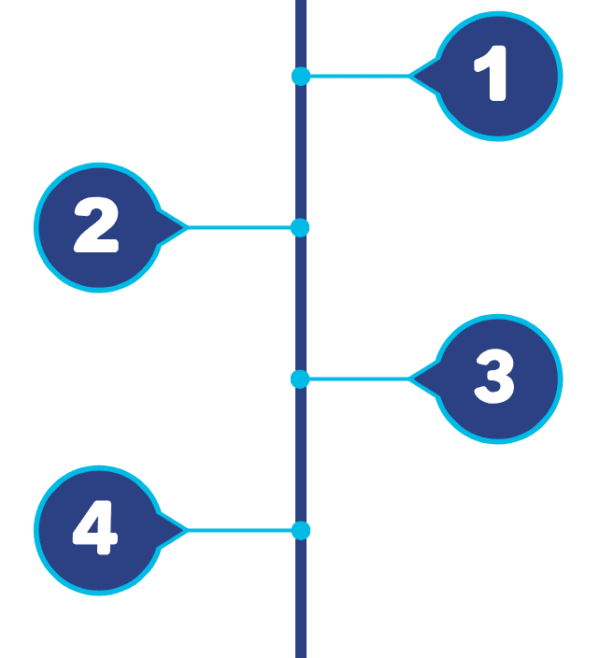
Assessment
Evaluate controls, documentation, and governance practices against the selected NIST framework. This produces a structured gap view and an improvement plan that prioritizes what matters most for defensible readiness.
Readiness Review
Validate evidence retrievability, documentation consistency, and explanation clarity under review conditions. This helps confirm the environment can withstand contractual, regulatory, or third-party scrutiny without avoidable rework.
Scope & Baseline
Define the system boundary, confirm the applicable NIST framework, and document assets, users, data flows, and dependencies. This establishes the current baseline and ensures everyone is working from the same scope and operating context.
Remediation
Address deficiencies and strengthen System Security Plans, control narratives, procedures, and supporting evidence so documentation and implementation remain aligned to NIST expectations. This phase closes gaps without creating unnecessary overhead.
NIST Deliverables
Clear, tangible outcomes aligned to each stage of our fast-track approach.
- Defined system boundary and asset inventory
- NIST framework gap assessment and remediation plan
- System Security Plan aligned to operations
- Control narratives with traceability mapping
- Evidence portfolio mapped to control families
- Corrective action register with tracking
- Readiness validation package for review
Supporting Regulated and Federal-Aligned Environments
We support organizations operating in high-assurance environments where cybersecurity oversight and regulatory scrutiny are integral to business operations.


A Proven Partner for High-Stakes Compliance

100%
Successful Readiness
Outcomes

1000+
Organizations Supported
Globally

30+
Regulated Standards
Covered

20+
Years of Consulting
Experience

Trusted Where Compliance Matters
AtoZ Management Consulting supports organizations operating in regulated and federally aligned environments where cybersecurity governance must withstand structured review. We translate NIST CSF, 800-171, 800-53, and RMF requirements into disciplined, defensible implementation aligned to operational reality. Our approach emphasizes boundary clarity, control traceability, and evidence integrity to ensure readiness without unnecessary complexity. Our long-term client relationships and 100% certification success rate reflect that trust.
NIST Frequently asked questions (FAQs)
Which NIST frameworks apply to my organization?
The most adopted NIST frameworks and standards include the NIST Cybersecurity Framework (CSF), NIST SP 800-171, NIST SP 800-53, and the Risk Management Framework (RMF). The applicable framework depends on whether your organization handles federal information, controlled unclassified information (CUI), supports regulated industries, or operates under contractual cybersecurity obligations. Selecting the correct framework and defining its scope is the first critical implementation decision.
Is NIST compliance mandatory?
NIST itself is not universally mandatory. However, it becomes mandatory when incorporated into federal contracts, regulatory expectations, or customer cybersecurity requirements. Organizations handling CUI under federal contracts must comply with NIST SP 800-171. Federal agencies and system operators often align to NIST SP 800-53. Many private sector organizations voluntarily adopt the NIST CSF to demonstrate cybersecurity maturity. Obligation is contract-driven, not voluntary once flowed down.
What is the difference between NIST CSF, NIST 800-171, and NIST 800-53?
NIST CSF is a high-level cybersecurity risk management framework structured around Identify, Protect, Detect, Respond, and Recover.
NIST SP 800-171 defines specific security requirements for protecting Controlled Unclassified Information in non-federal systems.
NIST SP 800-53 provides a comprehensive catalogue of security and privacy controls typically applied within federal information systems and high-assurance environments.
The level of prescription increases from CSF to 800-171 to 800-53.
How long does NIST implementation take?
Implementation timelines depend on system complexity, scope clarity, and current maturity. Organisations with clearly defined boundaries and documented controls may require several months. Where system scope is undefined, documentation is incomplete, or control ownership is unclear, timelines can extend significantly due to rework. Structured scoping early in the programme prevents delay later.
How is NIST compliance enforced?
Enforcement depends on context. For federal contractors, compliance may be validated through audits, self-attestation mechanisms, or third-party assessments depending on program requirements. For regulated sectors, enforcement may occur through agency oversight or contractual review. The practical reality is that NIST alignment must withstand scrutiny when requested.
How do we define the correct system boundary for NIST compliance?
Defining the system boundary requires identifying where regulated or sensitive data resides, how it flows, who accesses it, and which systems support it. We begin with data flow mapping, asset identification, and role analysis before documenting scope. Poor boundary definition is one of the most common causes of scope expansion during review. A clearly justified boundary prevents drift and supports defensible implementation.
What typically causes NIST programs to fail under review?
Most review failures are not technical. They occur when documentation, control narratives, and operational behavior do not align. Common issues include undocumented system dependencies, incomplete evidence, unclear risk rationale, and monitoring practices that exist only on paper. A defensible program requires consistency between written policy and demonstrable system behavior.
Can NIST implementation scale as our organization grows?
Yes, provided governance structures and control ownership are clearly defined from the outset. A scalable program includes documented risk methodology, defined roles, monitoring cadence, and evidence lifecycle management. Implementation designed only for short-term validation often requires costly redesign later.
What should we look for in a NIST consulting partner?
Organizations should assess whether a partner emphasizes boundary clarity, risk traceability, documentation integrity, and evidence sustainability. Effective NIST consulting extends beyond policy drafting. It requires aligning leadership, technical teams, and compliance functions to produce a program that withstands structured review over time.
How do we maintain NIST alignment after initial implementation?
Sustained alignment requires periodic risk review, evidence refresh cycles, monitoring validation, and governance oversight. We design programs that support continuous oversight rather than one-time readiness exercises. This reduces rework and protects long-term compliance posture.